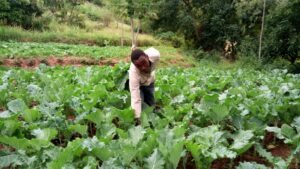
100 women and youth will learn kitchen gardening and tree nursery planting skills aimed at increasing food security, generating income, and promoting environmental conservation. This initiative also seeks to build resilience for a sustainable future in Nyamira, Kenya.
Local Solution
Fruits of Hope and Development Initiative (FRUHDI) is implementing a practical, cost-effective approach to address poverty, food insecurity, and environmental degradation in Nyamira County. We are establishing accessible kitchen gardens and tree nurseries that enable households to grow nutritious vegetables and fruits, while sustainably managing trees for future income and environmental health.
Many families in communities such as Bouti, Bochura, Nyamataro, and nearby villages face limited resources, poor nutrition, and environmental degradation. These issues are compounded by a lack of knowledge about modern farming and tree planting practices. In response, this project offers a practical, affordable solution: establishing kitchen gardens and tree nurseries that are manageable, accessible, and sustainable for local households. The participants requested this support following FRUHDI’s previous successful interventions in neighboring villages.
Participants will undergo two theoretical sessions and ongoing practical training over six months, covering key practices such as site selection, soil preparation, crop selection, planting techniques, pest and disease management, harvesting, and marketing strategies. The training is participatory, involving participants in planning, implementation, and evaluation to ensure relevance and ownership.
This approach is affordable and manageable, costing approximately €233 per household annually, requiring only a small land plot of about 50×50 feet (or 15×15 metres), and relying on household labor. The vegetables cultivated will include cowpeas, pumpkin leaves, amaranth, kale, carrots, and beans. Additionally, the project promotes planting avocado trees to provide fruit for household consumption and sale, further diversifying income streams. Most vegetables mature within three weeks to three months, enabling quick returns.
To ensure sustainability, the project will establish local seed banks, develop reliable market linkages through cooperatives, and provide continuous training on improved farming practices and financial management. These efforts are designed to create lasting impacts, empowering communities to maintain and expand their food security and income-generating activities beyond the project period.
FRUHDI brings extensive experience in community-based farming and environmental projects, with a proven track record of empowering vulnerable populations through sustainable agriculture. Our team’s expertise ensures effective training, resource management, and market linkages, maximizing the project’s success and long-term impact.
Lives Improved
In the short term, 100 households will access more nutritious food, increase household income, and improve living standards. Over the long term, increased disposable income will enable 400 family members to afford better healthcare, education, and adopt improved environmental practices, leading to greater community wellbeing and resilience.
One year from now, project areas will be vibrant with thriving gardens and nurseries, families will be earning steady income, and children’s school fees will be covered.
Community Impact
Community members will observe improved household welfare and environmental health. The project will be deemed successful when families can meet their basic needs and consistently support their children’s education.
We will measure success through improvements in household living conditions and the sustainability of garden and nursery activities. Success will be evident when families meet their basic needs, children’s school fees are paid, and communities actively maintain and expand their gardens and environmental efforts.
Budget
The total budget for these activities is Ksh 780,487 (or €5,307). The funds will be used to:
- Cover training sessions
- Procure planting materials
- Monitor and evaluate the project
- Cover administrative costs and contingencies
- 5% to iMPACT direct for facilitating direct donations to local solutions (which helps to cover costs of the website, promotion and proposal writing, costs of financial services, and the support to NGOs).
Own Contribution: FRUHDI, together with project participants, will contribute labor and farm tools.
Testimonial
Ms. Moraa, a single mother of three, reports earning Ksh 2,000 (approximately €15) daily from her kitchen garden, enabling her to pay school fees and support her children’s aspirations. She credits the project for transforming her livelihood and her family’s life.
Download PDF Here



100 women and youth will learn kitchen gardening and tree nursery planting skills aimed at increasing food security, generating income, and promoting environmental conservation. This initiative also seeks to build resilience for a sustainable future in Nyamira, Kenya.
Local Solution
Fruits of Hope and Development Initiative (FRUHDI) is implementing a practical, cost-effective approach to address poverty, food insecurity, and environmental degradation in Nyamira County. We are establishing accessible kitchen gardens and tree nurseries that enable households to grow nutritious vegetables and fruits, while sustainably managing trees for future income and environmental health.
Many families in communities such as Bouti, Bochura, Nyamataro, and nearby villages face limited resources, poor nutrition, and environmental degradation. These issues are compounded by a lack of knowledge about modern farming and tree planting practices. In response, this project offers a practical, affordable solution: establishing kitchen gardens and tree nurseries that are manageable, accessible, and sustainable for local households. The participants requested this support following FRUHDI’s previous successful interventions in neighboring villages.
Participants will undergo two theoretical sessions and ongoing practical training over six months, covering key practices such as site selection, soil preparation, crop selection, planting techniques, pest and disease management, harvesting, and marketing strategies. The training is participatory, involving participants in planning, implementation, and evaluation to ensure relevance and ownership.
This approach is affordable and manageable, costing approximately €233 per household annually, requiring only a small land plot of about 50×50 feet (or 15×15 metres), and relying on household labor. The vegetables cultivated will include cowpeas, pumpkin leaves, amaranth, kale, carrots, and beans. Additionally, the project promotes planting avocado trees to provide fruit for household consumption and sale, further diversifying income streams. Most vegetables mature within three weeks to three months, enabling quick returns.
To ensure sustainability, the project will establish local seed banks, develop reliable market linkages through cooperatives, and provide continuous training on improved farming practices and financial management. These efforts are designed to create lasting impacts, empowering communities to maintain and expand their food security and income-generating activities beyond the project period.
FRUHDI brings extensive experience in community-based farming and environmental projects, with a proven track record of empowering vulnerable populations through sustainable agriculture. Our team’s expertise ensures effective training, resource management, and market linkages, maximizing the project’s success and long-term impact.
Lives Improved
In the short term, 100 households will access more nutritious food, increase household income, and improve living standards. Over the long term, increased disposable income will enable 400 family members to afford better healthcare, education, and adopt improved environmental practices, leading to greater community wellbeing and resilience.
One year from now, project areas will be vibrant with thriving gardens and nurseries, families will be earning steady income, and children’s school fees will be covered.
Community Impact
Community members will observe improved household welfare and environmental health. The project will be deemed successful when families can meet their basic needs and consistently support their children’s education.
We will measure success through improvements in household living conditions and the sustainability of garden and nursery activities. Success will be evident when families meet their basic needs, children’s school fees are paid, and communities actively maintain and expand their gardens and environmental efforts.
Budget
The total budget for these activities is Ksh 780,487 (or €5,307). The funds will be used to:
Own Contribution: FRUHDI, together with project participants, will contribute labor and farm tools.
Testimonial
Ms. Moraa, a single mother of three, reports earning Ksh 2,000 (approximately €15) daily from her kitchen garden, enabling her to pay school fees and support her children’s aspirations. She credits the project for transforming her livelihood and her family’s life.
Download PDF Here
Share This:
richard@impactdirect.eu
Related Posts
Are you interested in joining the iMPACT direct Board and help champion African led solutions…
Learn about our consultancy and professional services to African NGOs, donors and diaspora groups looking…
In the first year of the Resource and Skills Training Centre, 130 young people build…
Each year, the vocational training centre equips 24 girls with dressmaking and hairdressing skills, and…
30 women in Northern Ghana will gain essential business management and entrepreneurial skills, accessing savings…
This project will empower an additional 60 women farmers in Nkwanta South to earn a…
25 marginalised girls in Makeni Sierra Leone will acquire skills in tailoring, sanitary pad production,…
10 women and girls who are survivors of sexual and gender-based violence will learn dressmaking,…
100 women in the North West Region of Cameroon will acquire skills in peanut processing…
10 socially disadvantaged women learn to produce eco-friendly reusable pads, paving the way to economic…